Floating Pond Plants: Nature’s Waterborne Wonders
For habitat-led projects with planting and biodiversity in mind, see our wildlife pond design service.
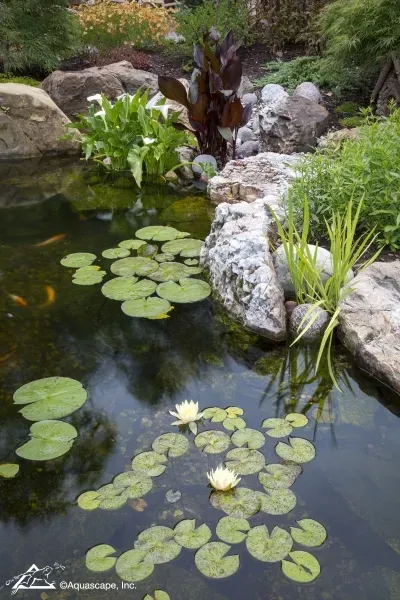
Floating pond plants do just as their name indicates — they happily float on the surface of the pond. Their roots dangle beneath the plant, absorbing all their nutrients from the water. The best traveled of any of the aquatic plants with no soil or rocks to hold them down, they peacefully drift along with the wind and any current present in the water.
Amazing Floating Filters
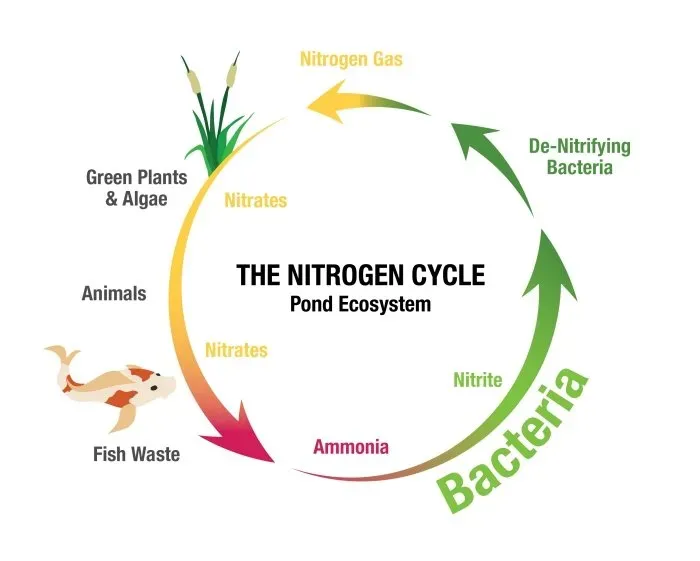
Besides their obvious beauty, floating plants perform the very important job of filtering ponds by removing nutrients directly from the water. Not only that, but they’re the easiest of aquatics to plant because you simply toss them into your pond.
Although floating plants also take their nutrients directly from the water, the roots will penetrate the soil if they come in contact with it. Floating plants that have rooted into the soil in shallower water are usually more robust than their potted counterparts.
Some of the most well-known examples of floating pond plants are water lettuce, water hyacinth, salvinia, fairy moss, and duckweed. The tiny duckweed can measure one-eighth inch across, while water lettuce can span almost a foot in diameter. Water lettuce and water hyacinth are usually introduced into the pond intentionally, while the smaller members of this group are often considered weeds due to their rampant, aggressive growth.
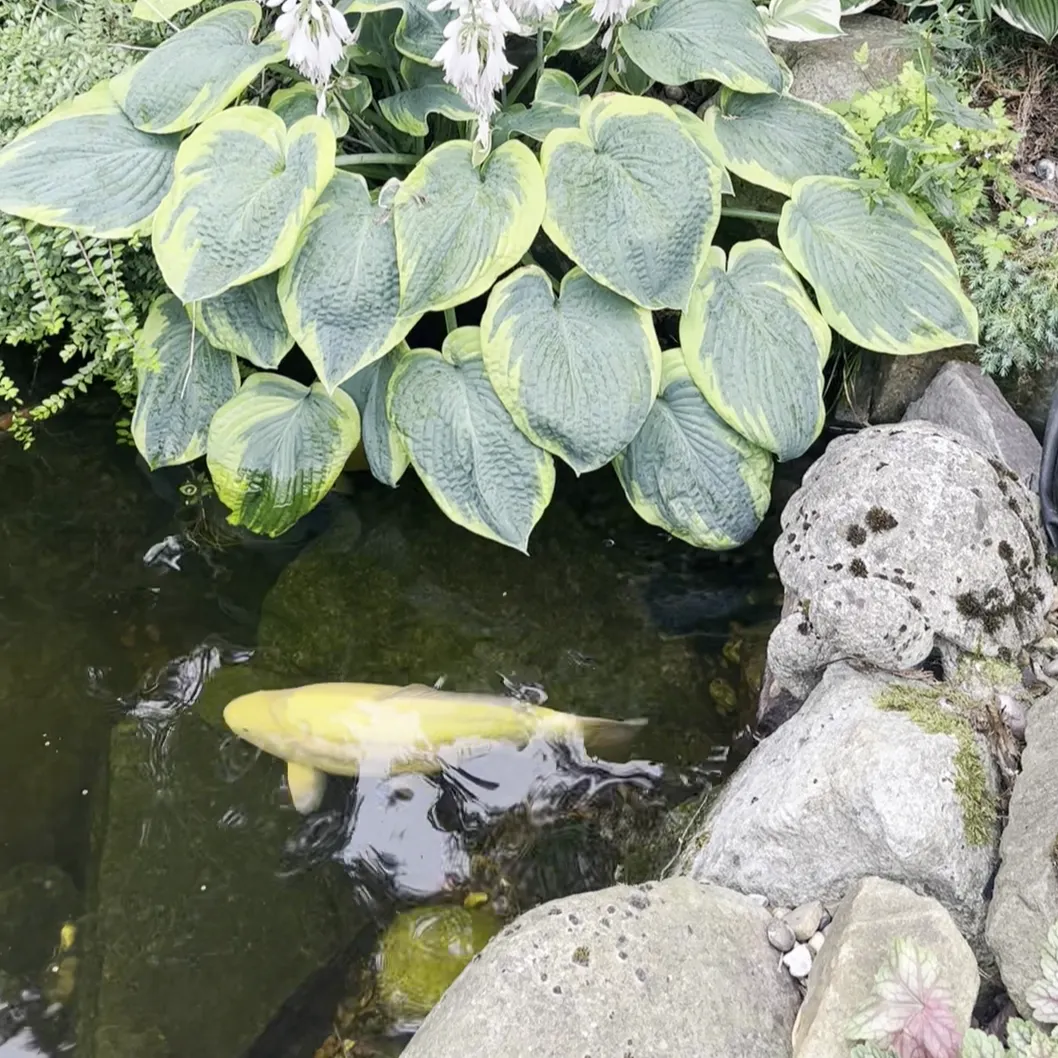
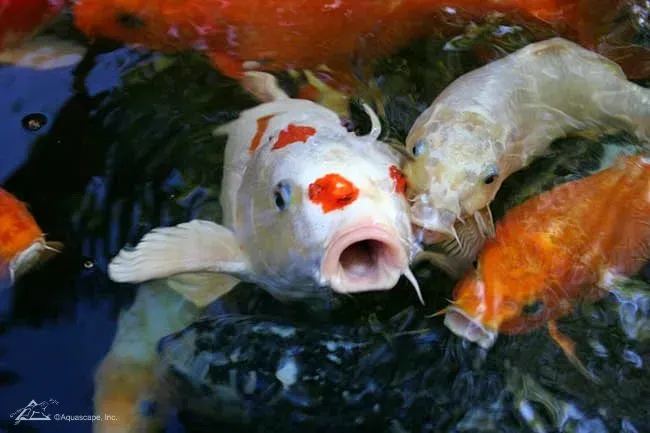
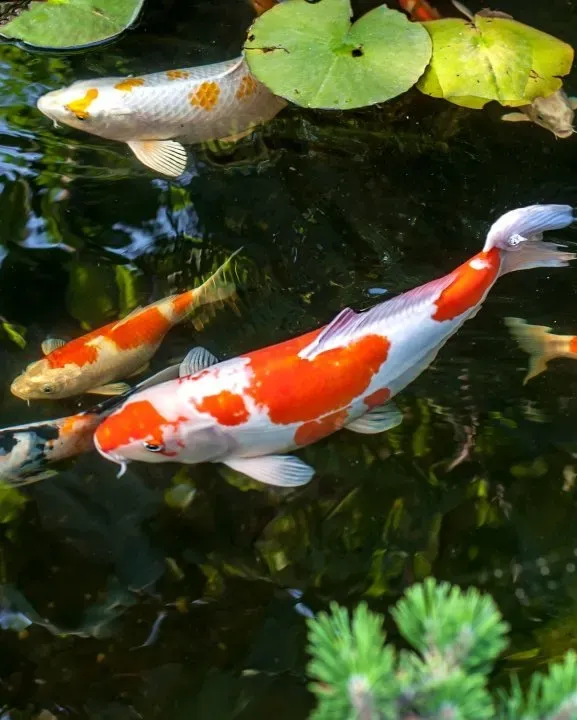
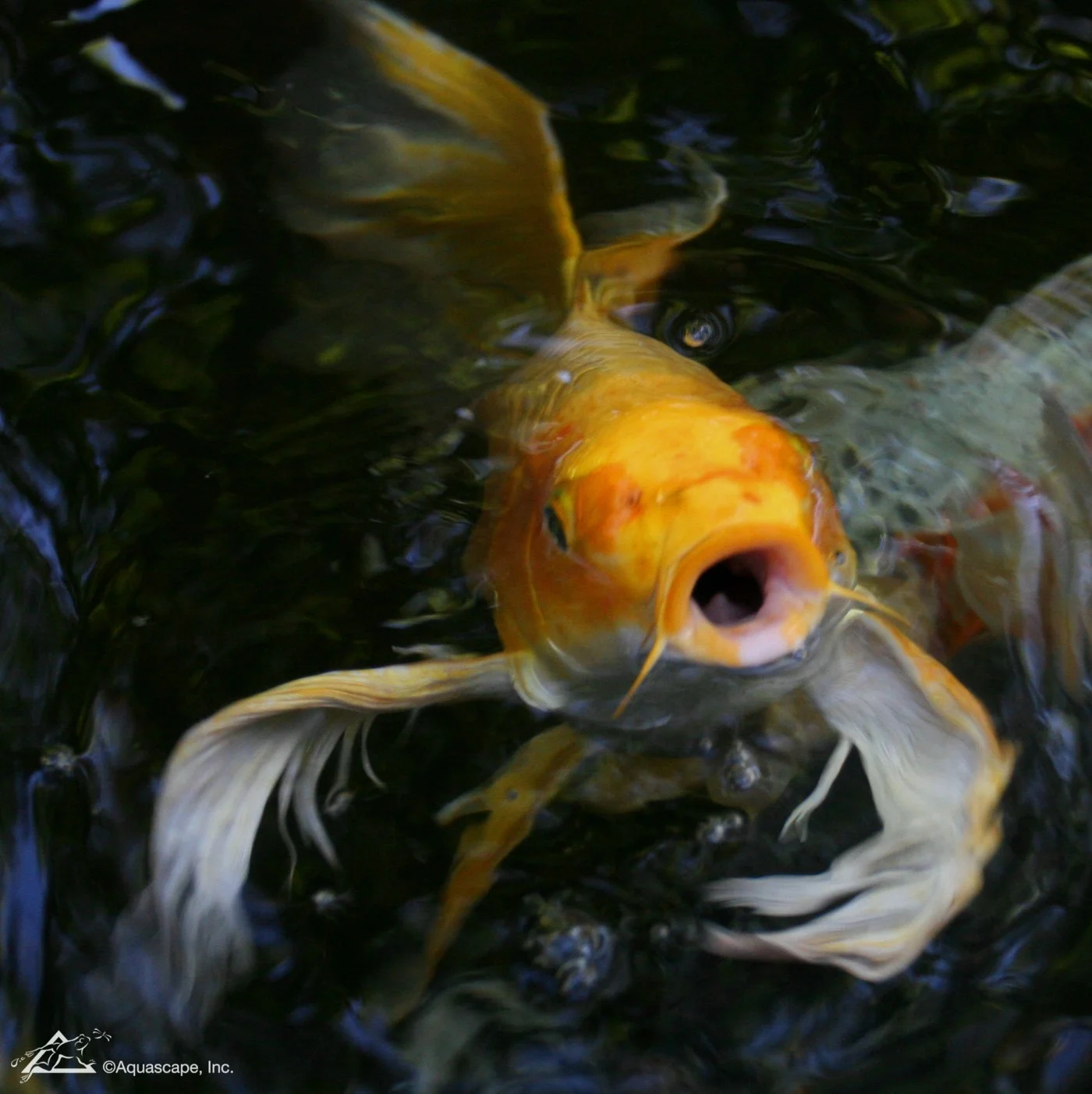
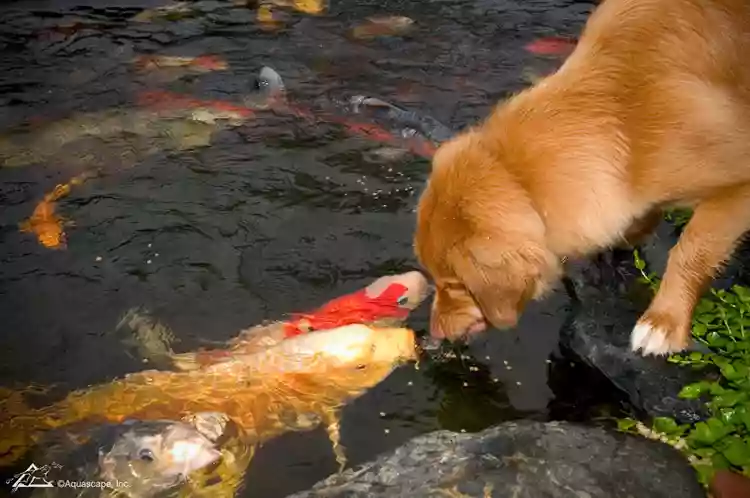
The roots of floating plants are sometimes eaten by koi, which usually won’t kill the plants, but may prevent them from flowering. To minimize this, you can place some of your plants in the biological filter.
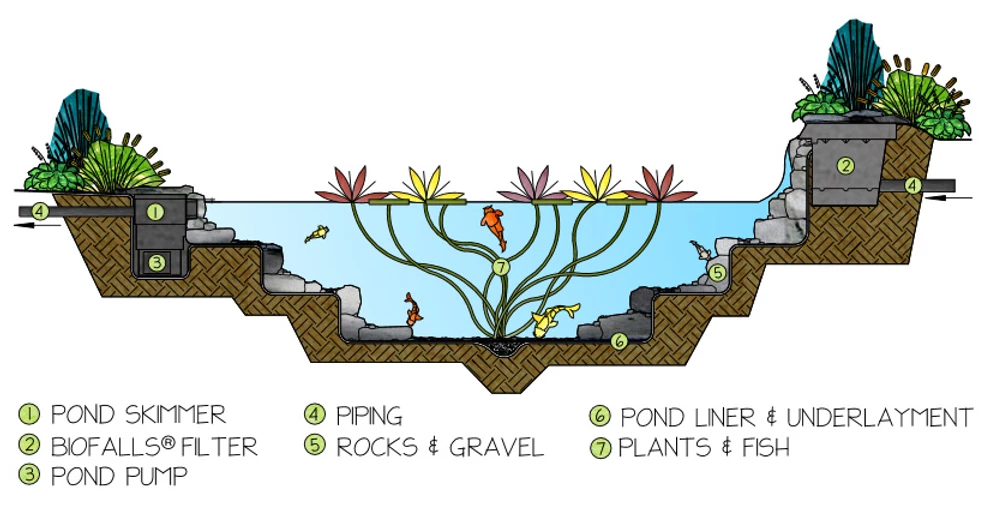
The floating plants in the biological filter have a nice, high-nutrient resting place not accessible by the koi. Since the biological filter is filled with so many nutrients, the plants that reside here can grow too much, damming the spillway of the waterfall. Simply remove some of the plants when this happens. You can toss them in your compost pile.
Water Hyacinth
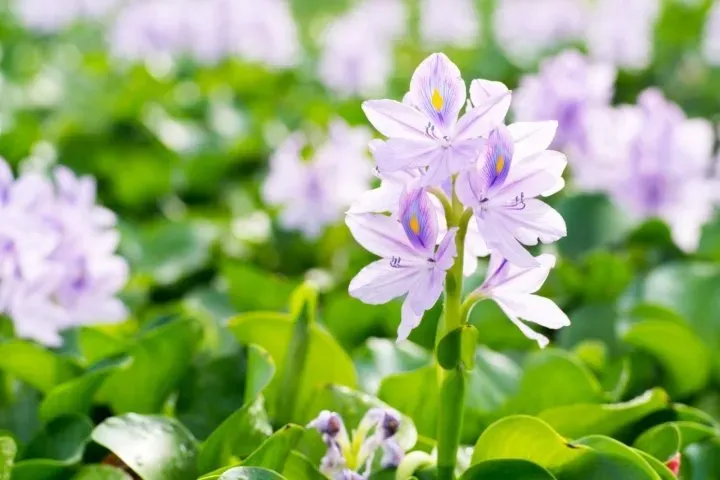
Water hyacinth (Eichhornia crassipes) is the most commonly sold aquatic plant. It has beautiful, light purple flowers that only last a day, but the plant will re-flower all season long. The plant produces spongy, air-filled bulbs at the base of each leaf, which serve as the plants flotation device.
Water hyacinth multiplies by producing runners that then sprout little baby water hyacinths. These can easily be broken apart and the extras can be moved to other parts of your pond or placed in container water gardens. The advantage and disadvantage of water hyacinth is that they’re very invasive. Due to their rapid growth, you only need to start with one or two plants which will quickly reproduce and spread, creating a beautiful carpet on your pond’s surface. On the other hand, water hyacinth can quickly take over. They’re easy to remove and the water they hold is great for your compost pile. Be advised that this plant is banned in some southern states.
When purchasing water hyacinth, do not purchase plants that are flowing because the flowers only last a day. Pick the plant with a bud that will open in a day or two. Keep in mind this is a tropical plant and should be treated as an annual in northern climes.
If your pond is free of excess nutrients, it’s possible for the leaves to turn yellow. You can fertilize the plant by placing them in a bucket of water that has water soluble fertilizer added to it. Leave the plants in the bucket until they begin to turn green and healthy again. Before you return the plants to your pond, rinse the roots so you don’t add any unnecessary nutrients to the pond water.
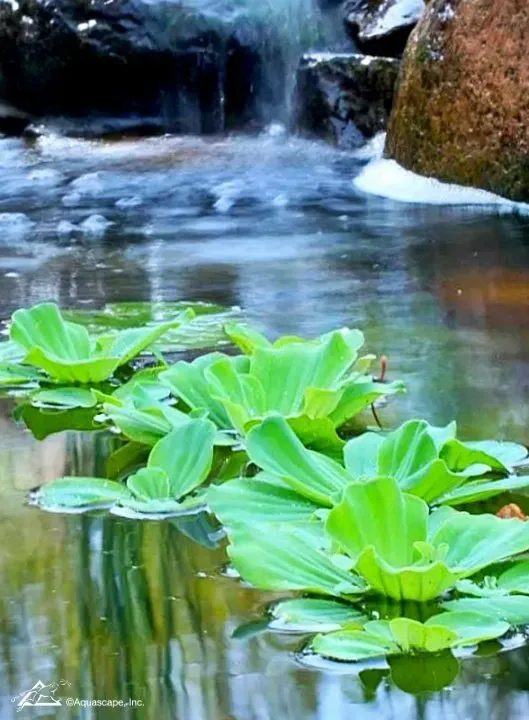
Water Lettuce
Water lettuce (Pistia stratiotes) is the second most popular aquatic plant. Water lettuce has a very similar growth habit to water hyacinth but does not grow quite as quickly. Anyone who has already grown this plant may be surprised to learn that it does have a white flower, but it is not easily seen unless you look for it at the base of the leaves.
Water lettuce grows well in either sun or shade, and in really hot areas, it prefers shade to the strong sun. It floats by using the surface tension of the water on the hairs of the underside of the plant. Just like water hyacinth, water lettuce should be treated as an annual in northern areas.
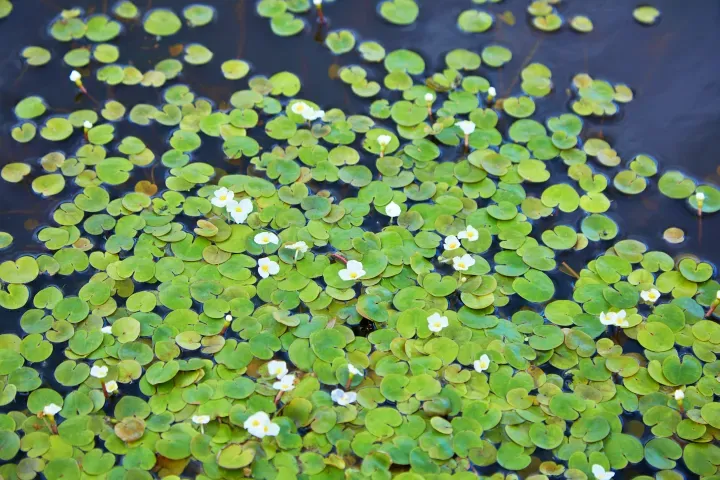
Frogbit
Frogbit (Hydrocharis morsus-ranae) has small, one-inch, heart-shaped leaves and small white flowers. It’s a great floating plant for mini ponds, or container water gardens, due to its small size. You can easily add this charmer to your pond, however.
Frogbit is able to float because its lower leaves create a sac filled with air, which provides buoyancy. Frogbit is hardy in Zones4–10 and overwinters by dropping buds to the bottom of the pond, where they remain until spring when the bud produces a baby Frogbit that floats to the surface.
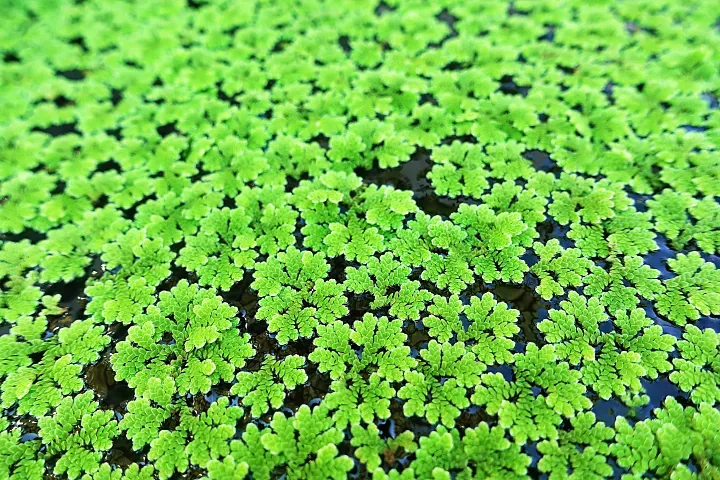
Fairy Moss
Fairy moss (Azolla caroliniana) is a small, fern-like green plant that will turn red when exposed to full sun. It most commonly ends up in your pond as an unplanned addition that rides in on aquatic plants you purchased.
Fairy moss can grow rapidly. To keep it under control, be sure to check your aquatic plant purchases for hidden plants, and eliminate them, if desired. Fairy moss can overwinter in your pond by freezing solid in the ice.
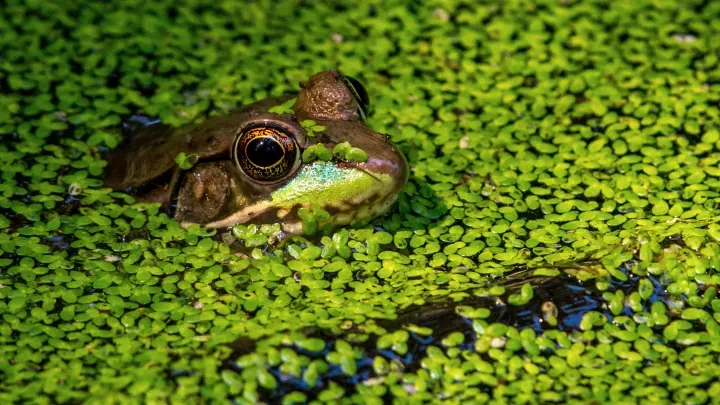
Duck Weed
Duck weed (Lemna spp.) is the smallest aquatic plant, with leaves only one-eighth inch in size. Don’t let the small size fool you, as it is capable of quickly covering an entire pond in a short time. Duck weed is like fairy moss in that it usually arrives in your pond by riding along with other aquatic plants you purchase.
Duck weed overwinters by dropping buds to the bottom of the pond. In the spring, the bud produces baby duck weed that float to the surface.
Sensitive Plant
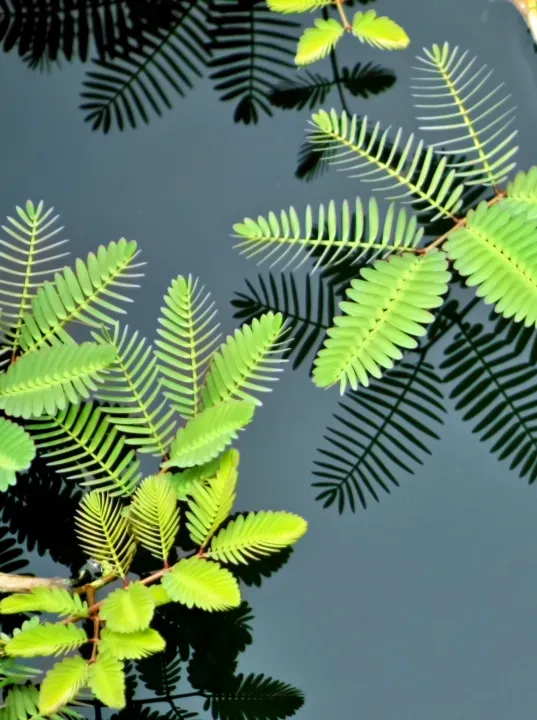
Sensitive plant (Neptunia aquatica) is a known favorite of children because the leaves close when touched. What you may not have realized is that it is an aquatic plant.
It floats across the surface of the water with white growths along the stem that appear to be foam. Sensitive plants produce yellow flowers along the stem throughout the summer. Each night, the leaves close and reopen in the morning. Sensitive plants are only hardy in Zones 9–11.
Why You Need Floating Pond Plants
Be sure to add a few floating plants to your pond to improve the aesthetics and filtration of your pond. They’ll compete with algae for the nutrients in your pond, thereby starving algae and helping to keep it under control.
Plus, there’s something so special about walking outside on a warm summer’s day and seeing a water hyacinth or two in bloom. Floating pond plants are perhaps the easiest aquatics to grow and they’re usually the least expensive plants at the pond store.
For more information contact